Moonbase
Ten years of educational software, in machine code on the Commodore 64 and the Apple IIe, for titles in Australian schools.
Part I · Moonbase Software, 1985–1995
Pieces of Eight and Goldfields, forty years on
For ten years, from 1985 to 1995, Moonbase Software worked on educational software for the Queensland Department of Education and for Jacaranda Software: the computer graphics at first, and more and more the programming, of their titles. Two of them were published in 1986, Pieces of Eight and Goldfields: here they are, forty years on, and what it took to fit them in a computer of the day.
Pieces of Eight won the Gold Medallion of the Australian Society for Educational Technology in 1986. Goldfields was still being published twenty years later, when Greygum Software released it for Windows and OS X in 2007.
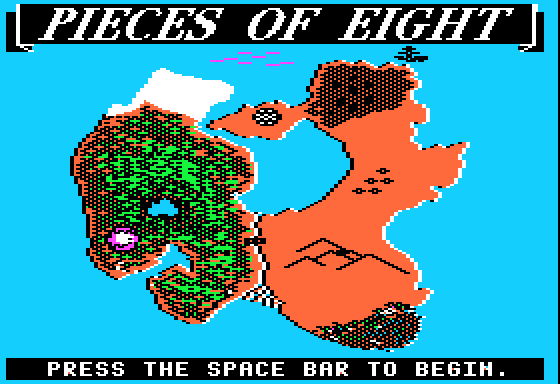 Pieces of Eight1986 · Apple II
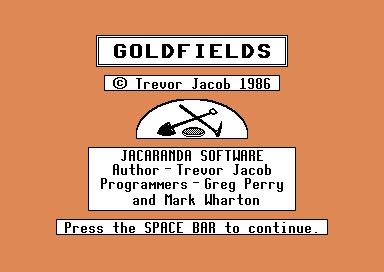 Goldfields1986 · Commodore 64
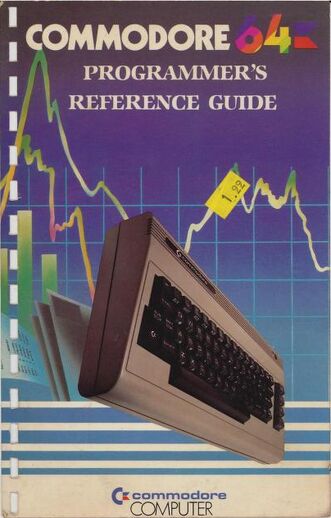
Everything I made in those ten years was 6502: one chip, two machines, and every byte counted. Half a dozen of those titles still run, and can be studied in detail, and even rebuilt.Mark Wharton, 2026
How it began
In 1984, in his last year at school, Mark Wharton taught himself machine code on a Commodore 64. That August his graphics were on the Queensland College of Art's stand at the Ekka, where Bruce Young of the Department of Education saw them; by the end of the year Mark was creating computer graphics for the Department's special education software, and in July 1985 he started Moonbase Software.
For Paul Holland's group at the Department, Mark created the graphics of Pieces of Eight; for Jacaranda Software, he and Greg Perry programmed the Commodore 64 version of Goldfields.
Then came Aztlan, Paul's second title, with all its graphics Mark's. Its programmer at the time was blocked by the graphics' speed and storage, and it began to look too ambitious for a small computer like the Apple IIe. Frustrated, Mark spent a weekend building a proof of concept in 6502 assembler and showed the team first thing on Monday; they were blown away by its speed, and made him the programmer as well as the artist.
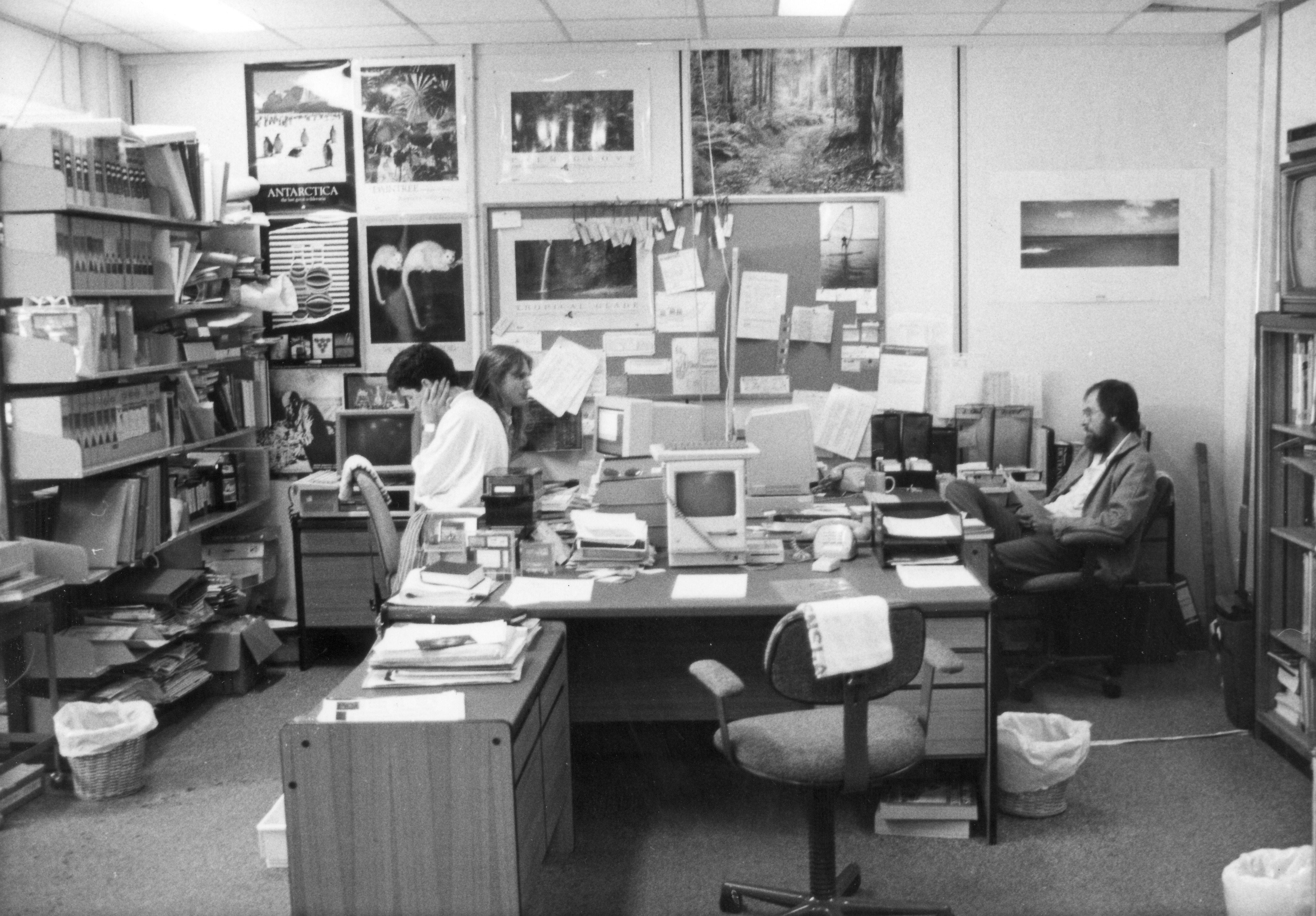
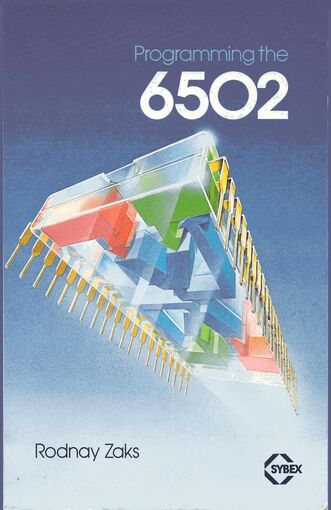
There were no libraries and no graphics packages. I built everything from scratch in 6502 assembly: bitmaps, fonts, lines, circles, icons, windows, menus and mouse pointers. I learned from one book, Rodnay Zaks's Programming the 6502, which I bought at the American Bookstore in Brisbane, and from Dr. Dobb's Journal; there was no internet, and no university course to get me started.Mark Wharton, 2026
Microsoft's 6502 BASIC, 1976
Microsoft's BASIC for the 6502 was completed in 1976 by Bill Gates and Ric Weiland, fifty years ago this year. In 1977 Commodore licensed it for a flat fee of $25,000, for its PET computers and, later, the VIC-20 and the Commodore 64; the Apple II's Applesoft BASIC was built from the same core source. In 2025 Microsoft released that source, BASIC M6502 8K VER 1.1, under the MIT licence.
Its source calls it BASIC M6502 8K, and as the source builds it for the KIM-1 it is 8,190 bytes, two short of 8K. In them are the editor for numbered lines, the interpreter, strings and arrays, arithmetic to nine digits with logarithms, square roots and trigonometry, and its error messages.
Where it was loaded into memory rather than built into a ROM, it asked one more question: WANT SIN-COS-TAN-ATN? Y kept all four, A all but ATN, and N none, their bytes given to the program instead, and SIN, COS, TAN and ATN an error from then on.
The Apple IIe's 6502 and the Commodore 64's 6510, a 6502 with a port of its own, run the same instructions.
Part II · Moonbase Enterprises, 1996–2004
Interactive multimedia, on CD-ROM and in kiosks
After 1995, Moonbase went on as Moonbase Enterprises, first in Toowoomba and then Brisbane: interactive multimedia on CD-ROM and in kiosks, for schools, museums and publishers, and later work in San Francisco and Tokyo. It was good work, but very different.
Today Mark's son Jethro lives across the road from Moonbase's old Brisbane office, studying games and interactive environments, and his window looks across at the old heritage-listed building.